🧠
How can I help?
Pick a starter below, or just type what's on your mind.
Starters
Pick a starter below, or just type what's on your mind.
SkillQuest ZIP or PDF. DOCX upload is available as an upgrade. Max 30 MB for documents; package ZIPs can include book assets.
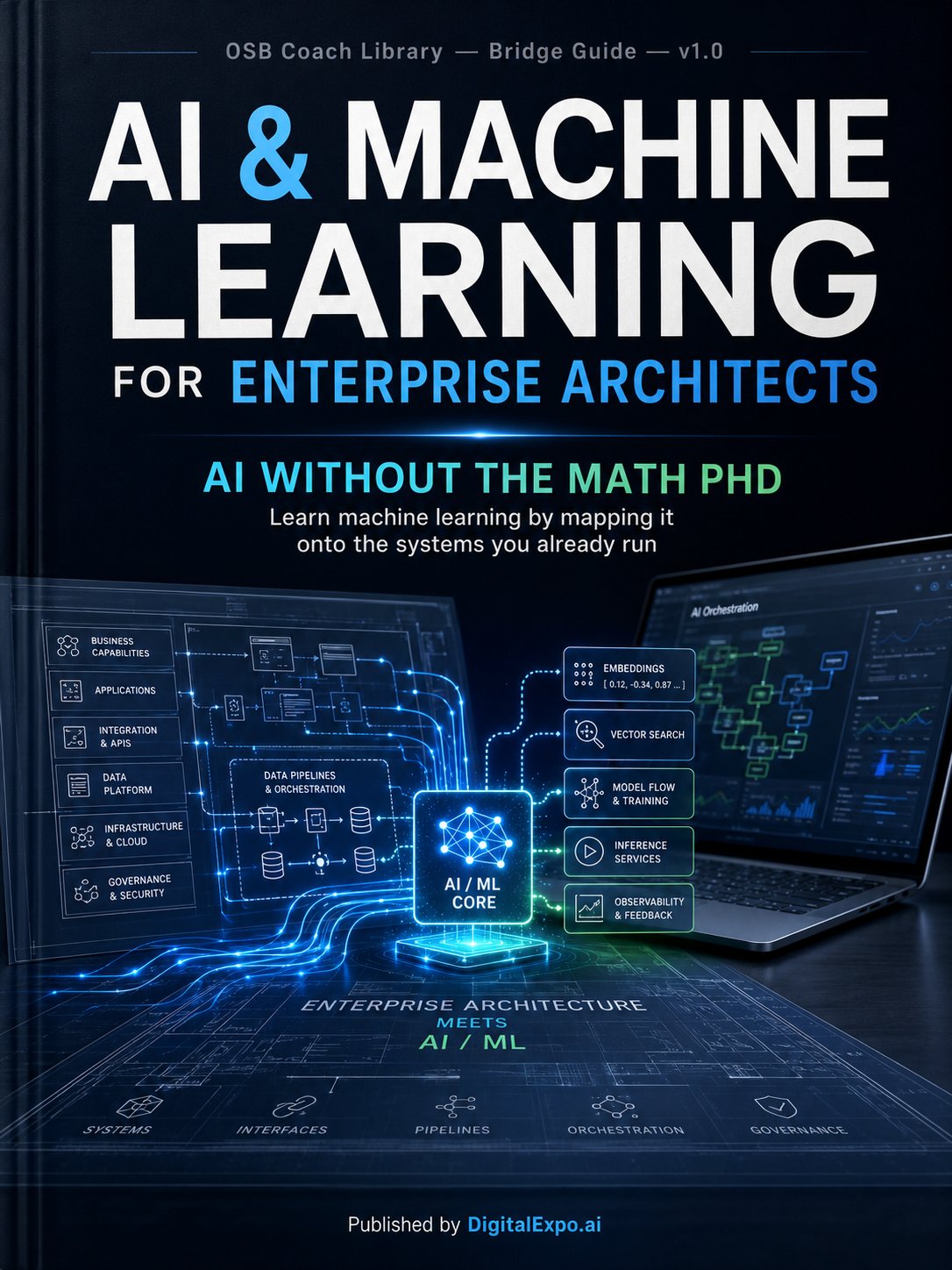
Enterprise architects, solution architects, integration architects, senior engineers, and technical leaders who already understand systems and now have to make decisions about AI. You can read a sequence diagram, you've governed a platform, and you're tired of AI explanations pitched at people who've never shipped anything.
If you've never designed or operated a real system, the analogies in this book are bridges to nowhere — you'd be translating into a language you don't speak yet. Start with a systems foundation first. And if your goal is to publish ML research, this is the wrong book; go get the math.
DigitalExpo books are different — not traditional ebooks or audiobooks.
Tap the green COACH button in the toolbar to ask questions, explore concepts, practice what you’re learning, and personalize the experience as you read.
The book gives you the knowledge. The Coach helps you turn it into understanding.