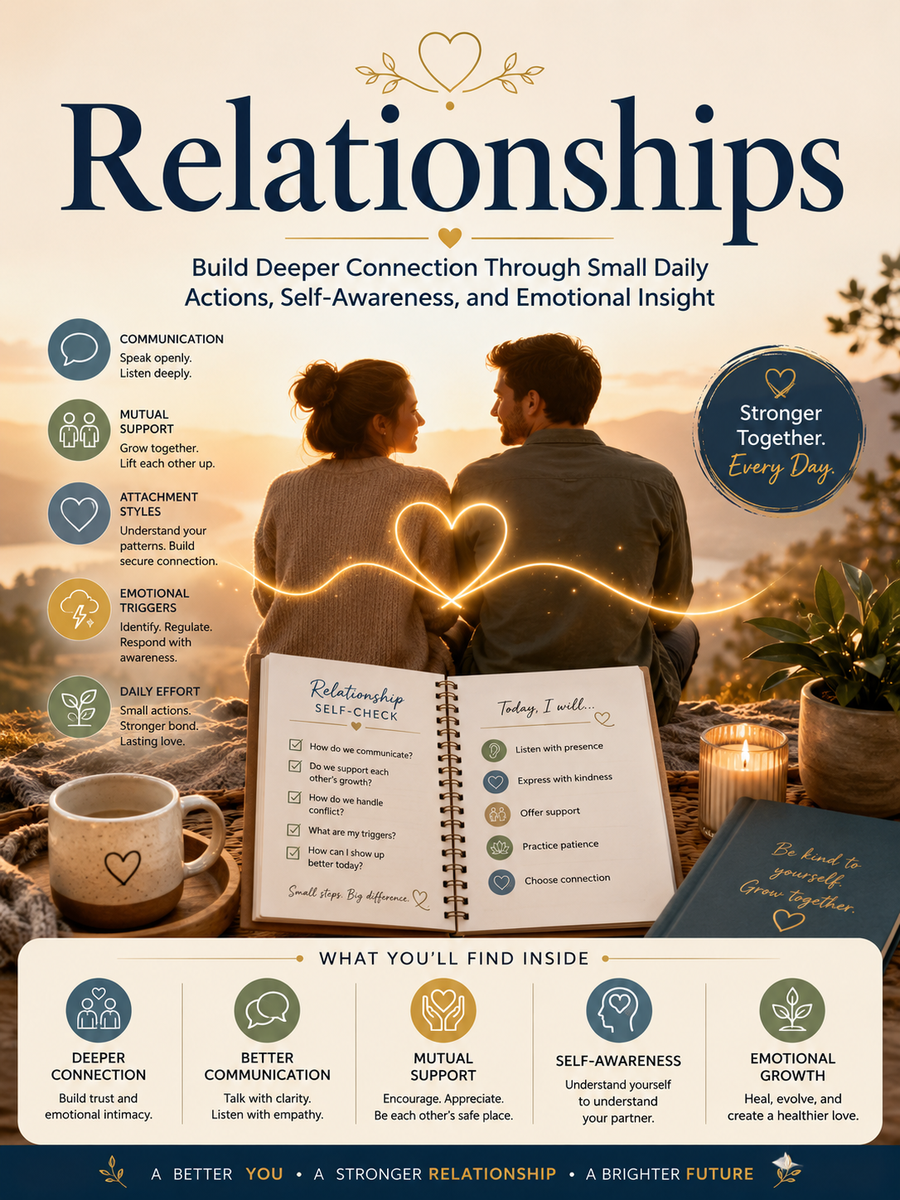
Grand gestures are memorable, but small daily actions sustain relationships. A "thank you," an unexpected note, a quick check-in — these carry more weight than lavish displays. Consistent small actions prove ongoing commitment in a way sporadic grand gestures can't.
Quick Self-Check
Rate your five closest relationships on a scale of 1 to 10 for connection, communication, and mutual support. Use the ratings as a baseline to spot where you need to invest more.
With the case for working at relationships made, turn the lens inward: know yourself first.
Section 2: Knowing Yourself First
Understanding Your Attachment Style
Your attachment style shapes how you show up in relationships. The four types — secure, anxious, avoidant, and disorganized — each have distinct patterns. Knowing whether you crave closeness, push people away, or swing between both helps you manage your reactions and build healthier connections. Look at past relationships. Did you fear abandonment? Feel suffocated? Naming your style is the first step to changing it.
Identifying Your Emotional Triggers
Everyone has triggers — specific situations that ignite strong reactions. Identifying them is essential. Think about recent conflicts or moments you felt overwhelmingly upset. Was it a tone of voice? A specific event? Once you know your triggers, you can prepare strategies to manage your response instead of reacting in ways that damage relationships.
Acknowledging Hidden Needs