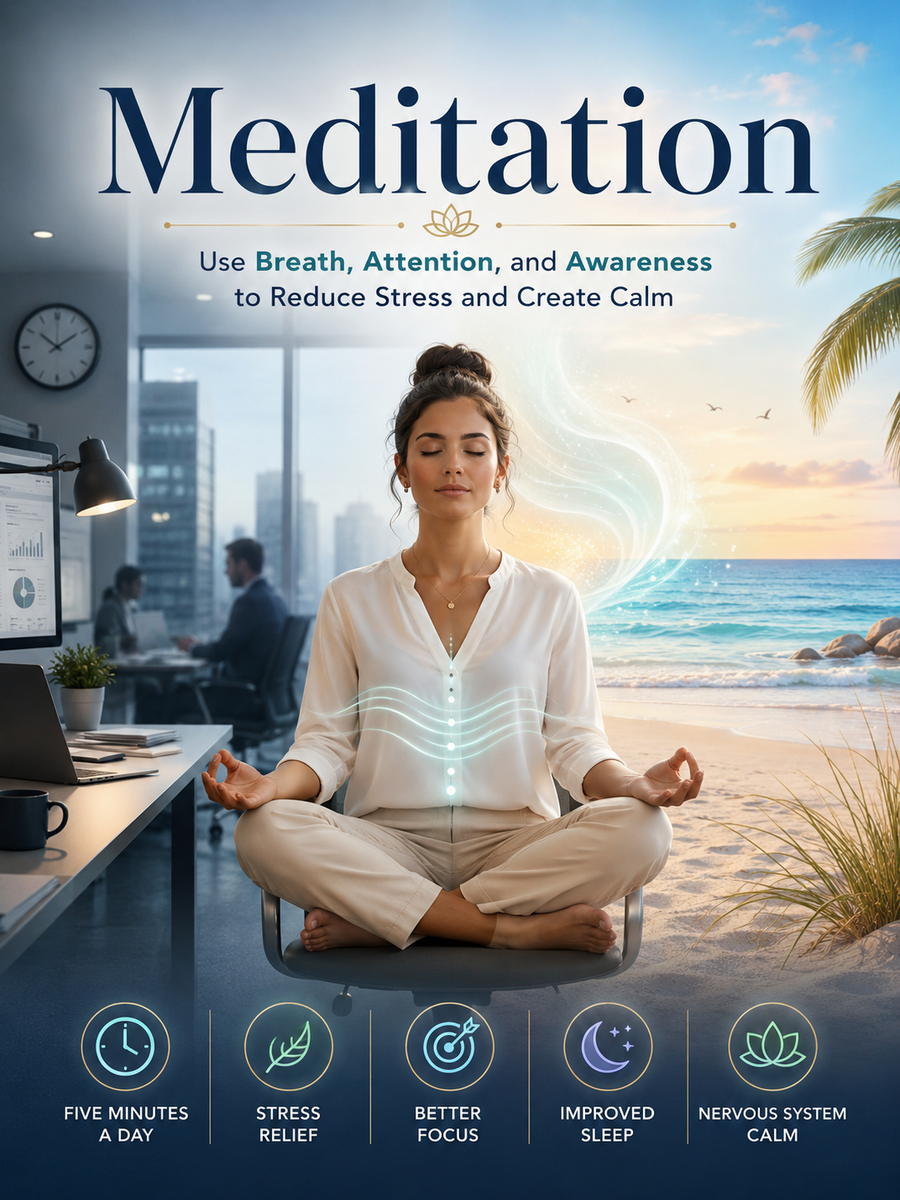
Five minutes a day will shift your baseline mood. That small window creates a buffer, letting you respond rather than react to what life throws at you. It's a practical starting point that fits the busiest schedule and grounds you immediately.
Common Myths Debunked
Myths like "I must clear all my thoughts" or "I have to sit cross-legged for an hour" stop beginners cold. Meditation is flexible and adapts to your style and your time. You don't need thoughtlessness, and you don't need hours to feel the benefits.
Are You a Prime Candidate for Meditation?
Run a quick self-check. Are you frequently stressed or overwhelmed? Do you have trouble sleeping or focusing? If you answered yes to any of these, meditation will help.
Next, you'll see how meditation actually works, so you can practice effectively from day one.
Section 2: How Meditation Actually Works
How the Breath, Attention, and Nervous System Connect
Meditation gets framed as mysterious, but its mechanics are straightforward. Focus on your breath as an anchor. This reclaims your attention from endless distractions. By noticing the rise and fall of your breathing, you engage the part of your nervous system that promotes relaxation. The connection isn't just mental—it's biological. As you breathe steadily, your body calms and your nervous system shifts from "fight or flight" to "rest and digest."
Concentration vs. Awareness