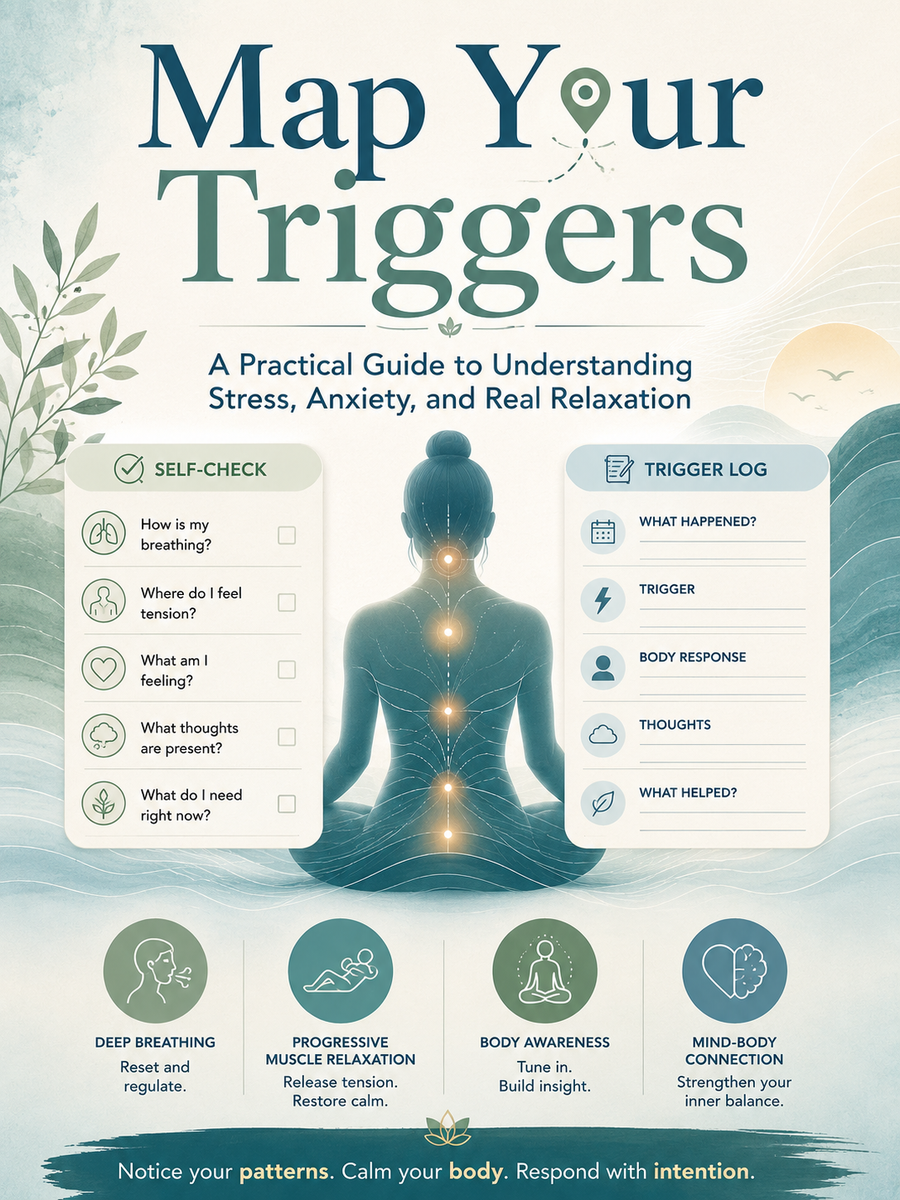
"Just relax" fails because it oversimplifies a physical process. Focus on tangible actions instead: progressive muscle relaxation, deep breathing. These interrupt your body's stress response by engaging your parasympathetic nervous system, producing real relaxation rather than wishful thinking.
The 60-Second Self-Check
Spend a minute each day checking in with yourself. Ask three questions: What am I feeling right now? What thoughts are running through my mind? Where is the tension in my body? This check builds awareness of your mental state and catches early signs of stress before they escalate.
When It's Bigger Than a Book
Sometimes stress and anxiety outgrow what self-help can address. If your stress significantly interferes with daily life, consult a mental health professional. They provide a tailored approach a book can't.
Next: how to identify exactly what sets off your stress responses.
Section 2: Map Your Triggers
The Two-Column Trigger Log: Event and Body Response
Start a two-column trigger log. In the first column, note the specific event that provoked a stress response. In the second, record your body's reaction—sweaty palms, racing heart, knot in your stomach. This captures clear cause-and-effect links, making the impact of each trigger visible.
External Triggers vs. Internal Triggers
Distinguish between external and internal triggers. External triggers come from your environment: an argument, a tight deadline. Internal triggers come from within: self-doubt, perfectionism. Recognizing both lets you address anxiety from every angle.
Spotting "Stacked" Triggers