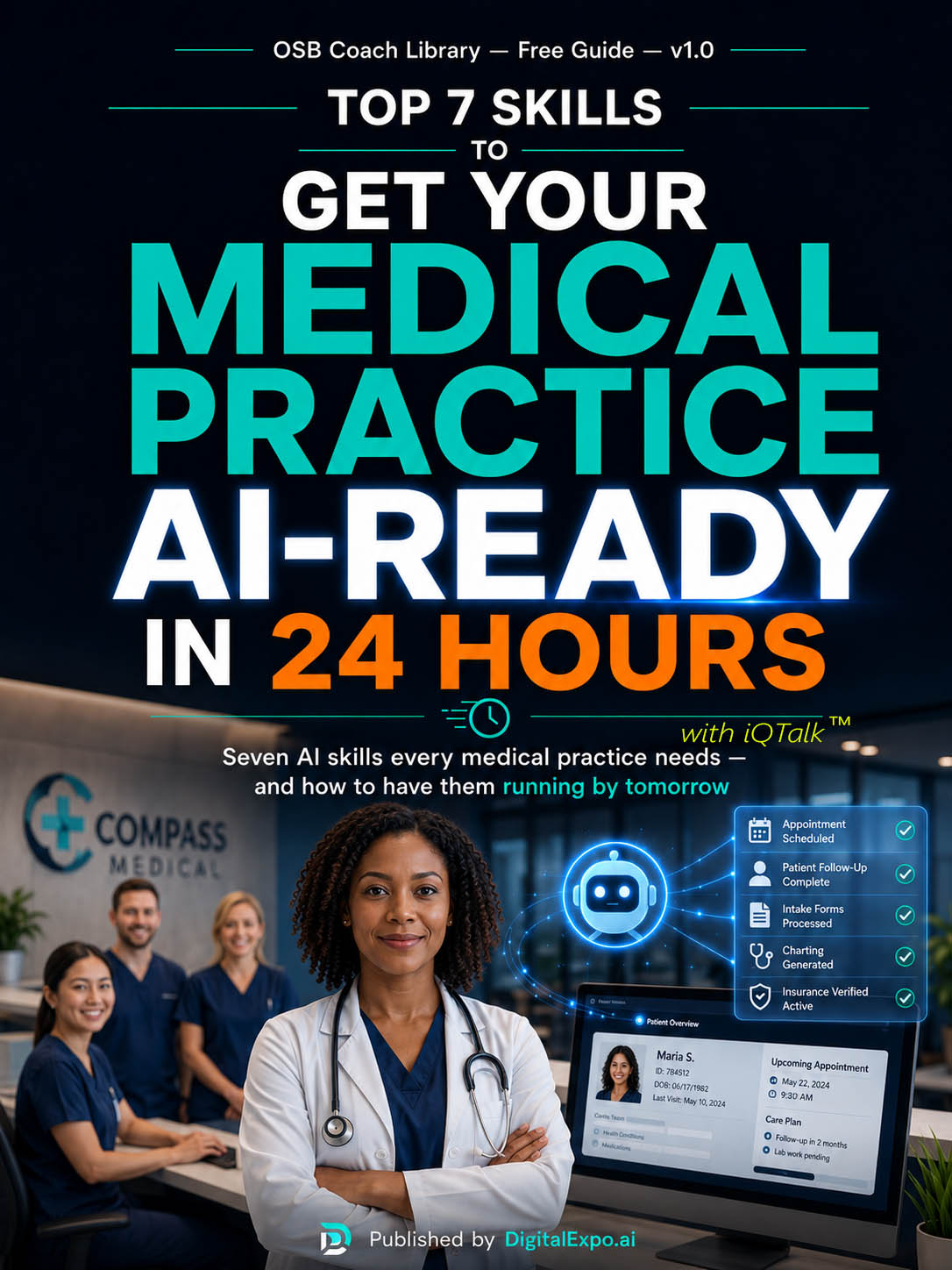
Seven AI skills every medical practice needs - and how to have them running by tomorrow
This guide is seven specific skills, each a job you'd otherwise staff a front office to do, and each can be live within 24 hours. You don't build them; you describe how your practice works and they get built and run for you as SkillBots. Read it fast, then start with number three — it plugs the most expensive leak you have.
How a SkillBot Actually Gets Built (3 Steps)
You might be picturing an IT project. It's the opposite.
- You describe how your practice works. Not code — a conversation. What do you ask a new patient? What counts as urgent versus routine? Which plans do you accept? This is your standard work, in your own words.
- It gets compiled into a SkillBot. Your standard work becomes an assistant that follows your rules exactly — answers in your practice's voice, asks your questions, escalates what should be escalated, and never makes things up. Real systems, not a toy chatbot. The same engine that builds a medical front office builds a dental or legal one — different practice, same grammar — which is why yours can be ready fast.
- It goes live, and it's operated for you. No servers, no maintenance, no babysitting. You check the schedule.
That's why "in 24 hours" is honest. You bring the knowledge; the engine builds it and runs it. You stay the clinician — now with a front office that never sleeps.
Skill 1 — Instant Response (The Intake SkillBot)
The first practice to respond usually wins the new patient. Not the best physician — the fastest front door. An anxious patient says yes to whoever answers first and makes the worry feel handled.