🧠
How can I help?
Pick a starter below, or just type what's on your mind.
Starters
Pick a starter below, or just type what's on your mind.
SkillQuest ZIP or PDF. DOCX upload is available as an upgrade. Max 30 MB for documents; package ZIPs can include book assets.
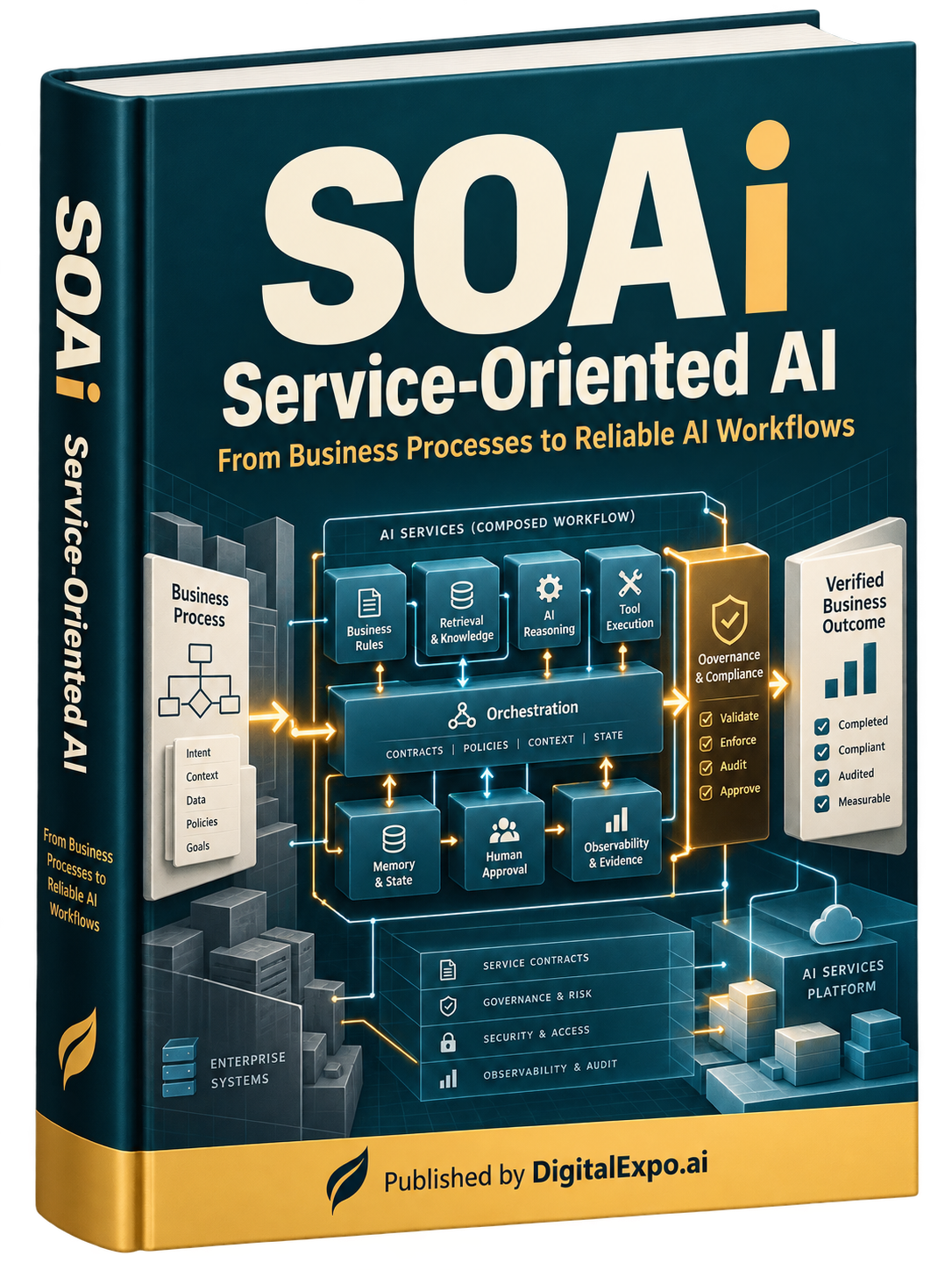
You will learn two lists. Seven responsibilities that every orchestration layer must account for: the model interface, tool contracts, control flow and state, grounding and retrieval, the governance gate, observability, and resilience with the trust boundary. And seven practices you perform regardless of tools: map the process, contract every step, ground before you generate, gate the consequential, instrument for replay, prove it, and operate and evolve.
Of every step you will ask one question: what must be true before this action is allowed, what may it change, and what evidence proves it completed correctly? Pre-conditions, permitted effects, post-conditions. Together they are a contract, and a step without one is not a step, it is a hope.
Learn the two lists and every framework becomes an implementation detail you can choose, compare, and replace. LangChain, LangGraph, CrewAI, a managed cloud platform, or forty lines of your own JavaScript are all answers to the question of who provides which responsibility. None of them is the capability.
Who it is for
Engineers, architects, and technical leads who can already write code and are now accountable for something a business depends on. It does not assume you have built an agent. It does assume you will be asked whether the one you build is safe to run.
If you have read our other technical books, you will find deliberate joins rather than repetition. Each chapter ends with a short section naming what it shares with the rest of the shelf, so a capability you already own is not taught to you twice.
How honest this book is about our own systems
Every responsibility in this book is illustrated against a real architecture, ours, including where ours falls short. Our governance gate correctly refuses to execute a consequential action and returns an approval envelope, and the endpoint that would approve it is unimplemented. Our observability is genuinely strong. Our retrieval baseline is naive in four specific ways. We have no inbound trust boundary, no retry, and no crash recovery, and no scored evaluation of answer quality at all.
DigitalExpo books are different — not traditional ebooks or audiobooks.
Tap the green COACH button in the toolbar to ask questions, explore concepts, practice what you’re learning, and personalize the experience as you read.
The book gives you the knowledge. The Coach helps you turn it into understanding.