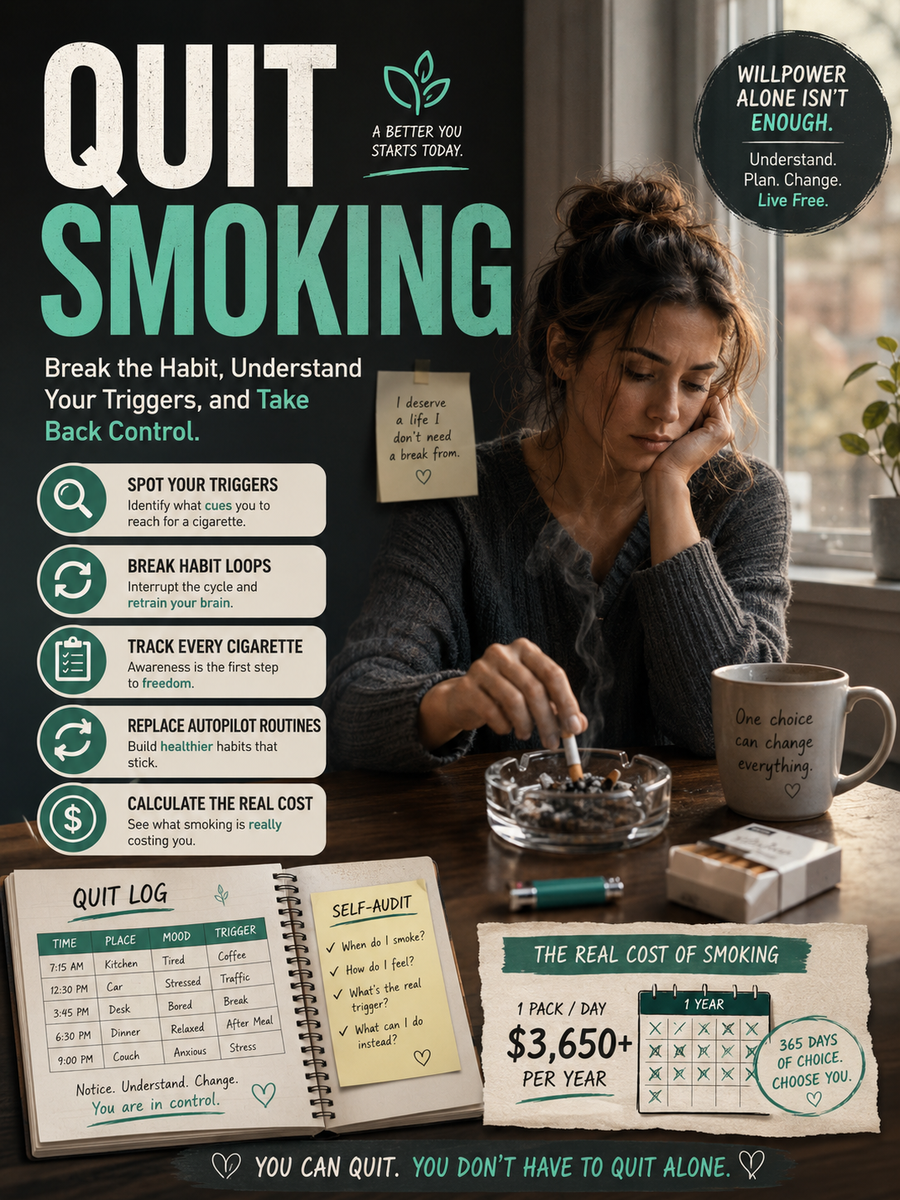
By week two, most people relying on willpower alone start to crack. Willpower is finite. It weakens under stress and erodes with every decision you make. Without strategies and support, cravings outlast your resolve and you relapse.
Physical Addiction vs. Habit Loops
Physical addiction is your body's dependence on nicotine. Habit loops are the cues, cravings, and responses woven into your day. Breaking the chemical dependence is only half the work. Dismantling the autopilot routines takes deliberate effort.
Conduct a Self-Audit
Map your habit:
- List when and why you smoke.
- Note specific times, places, and emotions.
- Flag the moments smoking feels automatic.
This audit shows you exactly how smoking fits into your life and where to intervene.
These insights set up the honest tracking work in the next section.
Section 2: Get Honest About Your Smoking
Log Every Cigarette
Track each cigarette for one week. Note the time, place, mood, and trigger. Use a notebook or a quit-smoking app. Observe without judgment. You're building a clear picture of your habit so your interventions can target it.
Recognize Autopilot Smoking
Pay attention to cigarettes you barely register—the ones you smoke out of pure habit. These autopilot smokes happen during driving, after meals, or with your morning coffee. Spotting them shows you which parts of your day run on unconscious cues, so you can interrupt them on purpose.
Calculate Yearly Costs