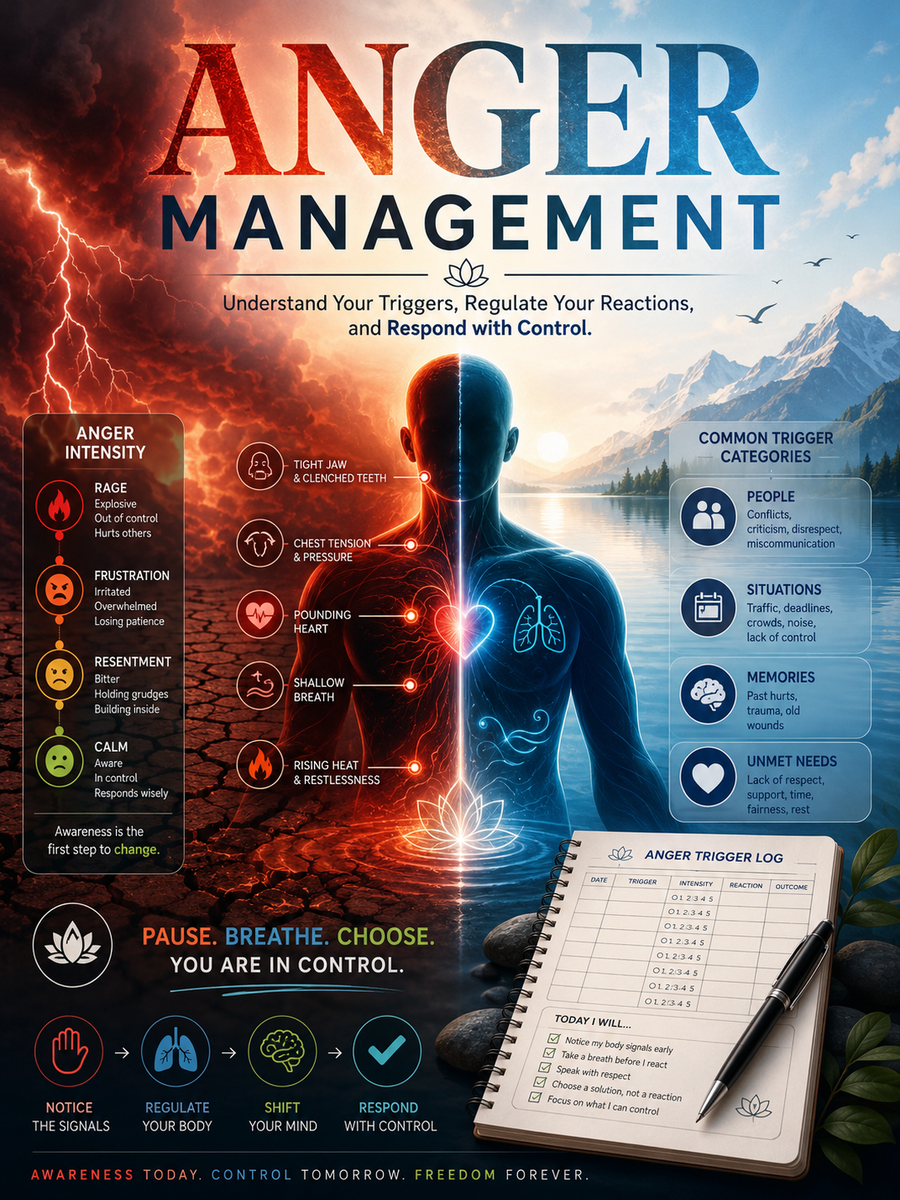
Anger shows up in your body: a tight jaw, a pounding heart, chest tension, quick shallow breaths, and rising heat. Spotting these signals early gives you the space to choose your next step instead of reacting on autopilot.
Anger vs. Frustration, Resentment, and Rage
Distinguish anger from its relatives. Frustration arises from unmet expectations or obstacles. Resentment is deep-seated, lingering bitterness. Rage is anger's extreme form, an uncontrolled outburst. Naming the exact emotion guides you toward the right response.
The Cost of Suppressing Anger
Suppressing anger looks productive but backfires, building physical and mental stress over time. Ignored anger festers and eventually erupts in destructive ways. Acknowledge and process it instead, so it doesn't shape your long-term health and relationships.
Next, you'll learn what triggers your anger—the first step to stopping it from controlling you.
Section 2: Find Your Triggers
The Four Common Trigger Categories
Identifying what sets off your anger is essential to managing it. Look at four categories: people, situations, memories, and unmet needs. Specific individuals or groups can be consistent sources of frustration. Situations like traffic, deadlines, or crowded spaces can push you to a boil. Memories that resurface unexpectedly act as triggers too. And unmet needs—not feeling heard, respected, or safe—can spark anger fast. Pinpointing these categories shows you where your intense reactions come from.
A Simple Log Method